Mar 13, 2025
Building a New Brand Channel in an Ambiguous Area
In startups, there are moments when you have to take risks even in areas where the KPI is still unclear. When a communication method has not yet been established or a new channel becomes urgently needed, I often find myself stepping in as the designer who sets the stage and creates a new flow. It is easy to point out gaps in an organization. It is much harder to identify branding gaps that no one feels immediate pain from and bring them to the surface.
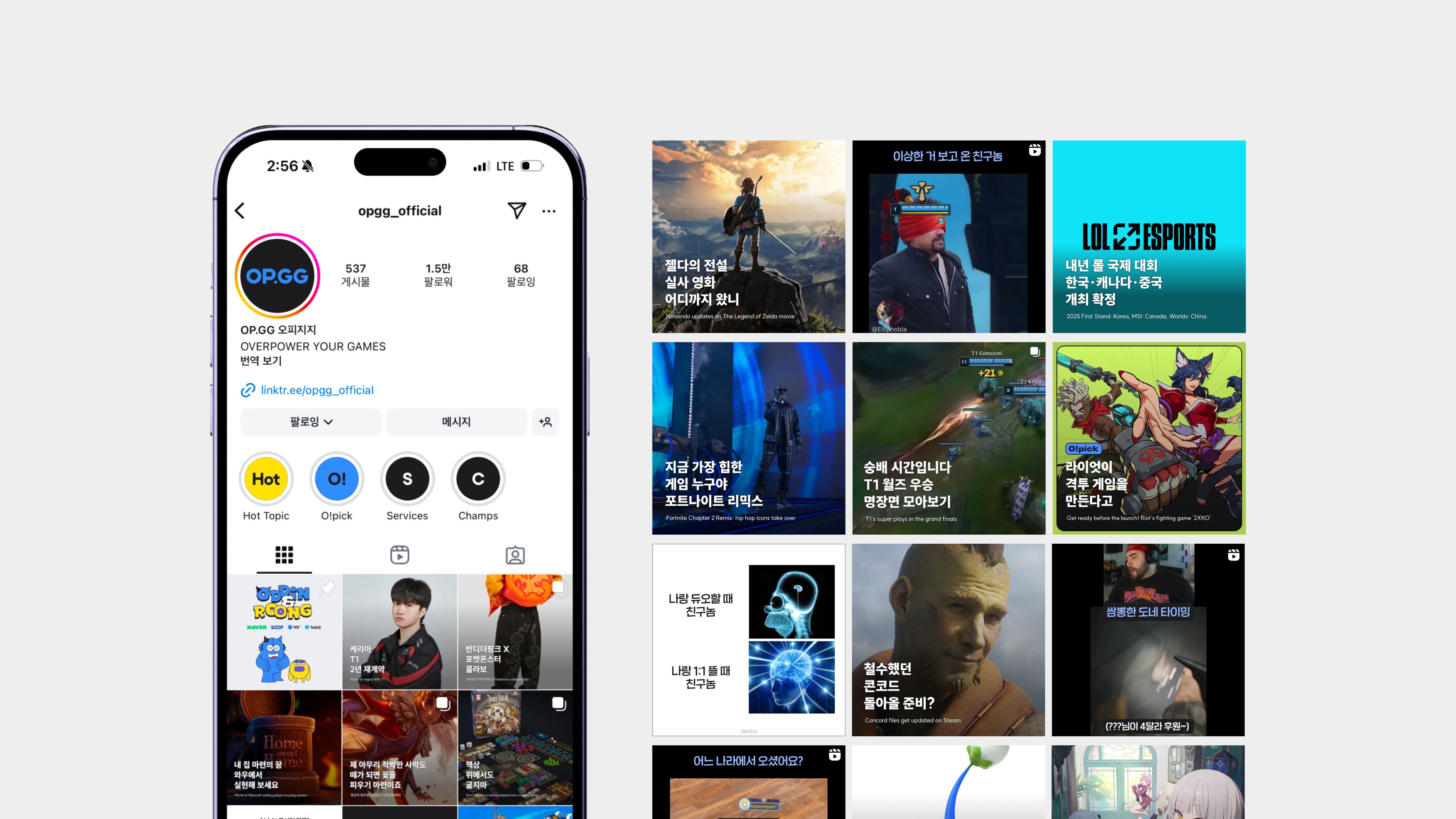
From a Stats Site To a Gamers’ Universe, 6K to 17K
As I lead the branding team at OP.GG, the company was trying to shift its frame from being known mainly for League of Legends stats to becoming a broader space for game culture. The mission was clear: move beyond a data-centered image and expand the brand into a place where gamers could relate, stay, and engage.
The branding team had already started building that direction through rebranding, the Gamers Universe message, and experiments like character IPs based on humorous in-game situations. What we lacked was a channel that could carry that message in everyday language.
Since branding was a supporting function, it was not easy to proactively push improvements before there was a clearly stated need. Still, I believed Instagram could become the right place to express the brand voice more directly. Rather than continuing with functional updates alone, I proposed restructuring the account into a game humor and news magazine. In the beginning, I took on both planning and production myself because I wanted to prove the direction before asking for broader support.
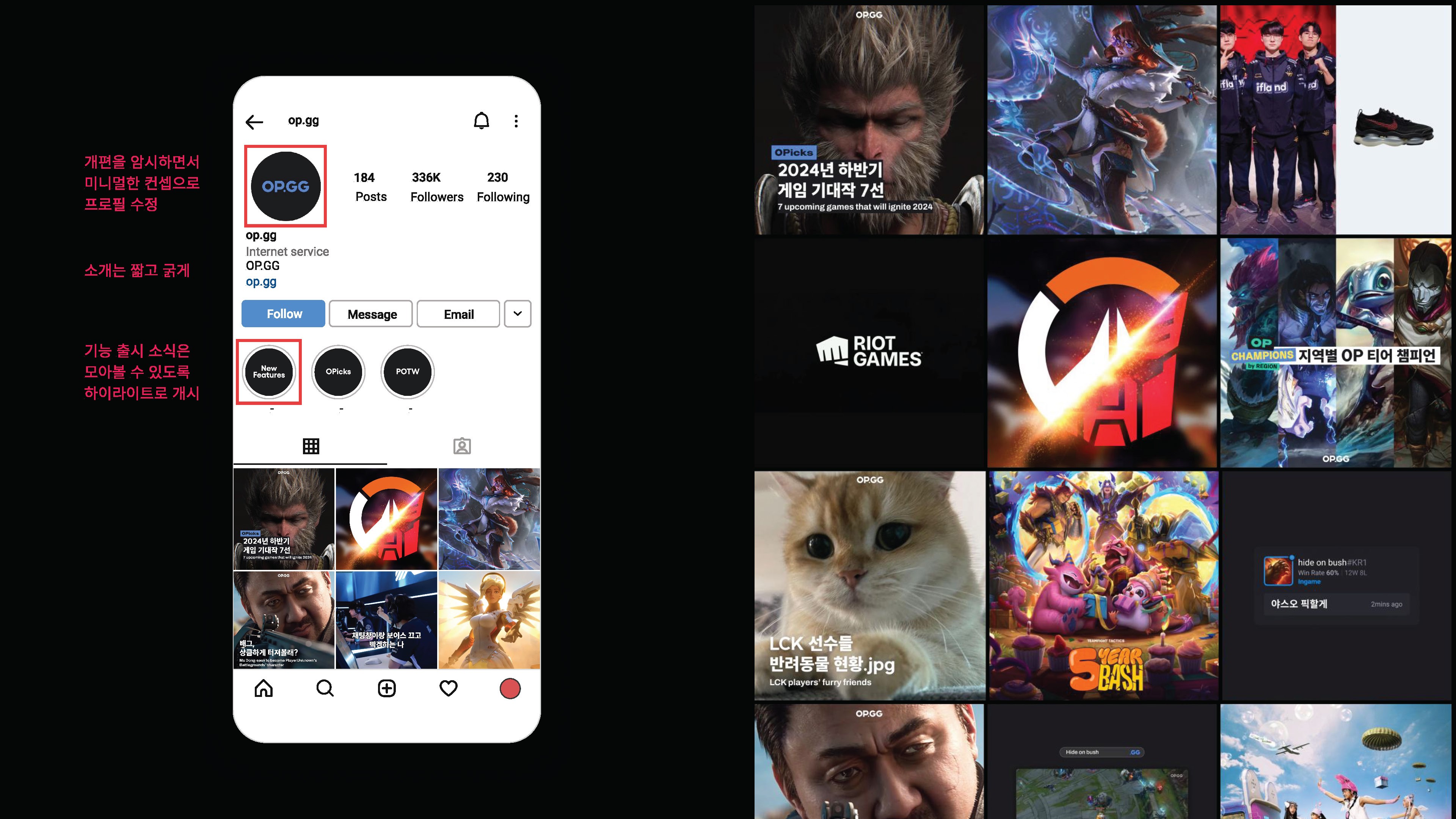
Proving Momentum Through Format and Operation
I simplified the channel into two core formats: relatable gamer humor and fast, curated game news. I also sharpened the voice so OP.GG would feel less like an observer and more like a player with instinct and taste.
At the time, the account had around six thousand followers, and I set ten thousand as the first milestone worth proving. I believed that once an official account crossed that threshold, both trust and participation would grow more easily. In the early stage, I pushed volume hard, posting three to four pieces a day under the hypothesis that output itself would raise interaction quickly enough to test the channel’s potential.
Humor content performed especially well, and a few posts took off through the algorithm, which helped the account reach ten thousand followers quickly. Later, the account grew to around sixteen thousand within three months, and even after the posting frequency slowed down, it continued to rise into the seventeen-thousand range. Advertising inquiries began to come in as well.
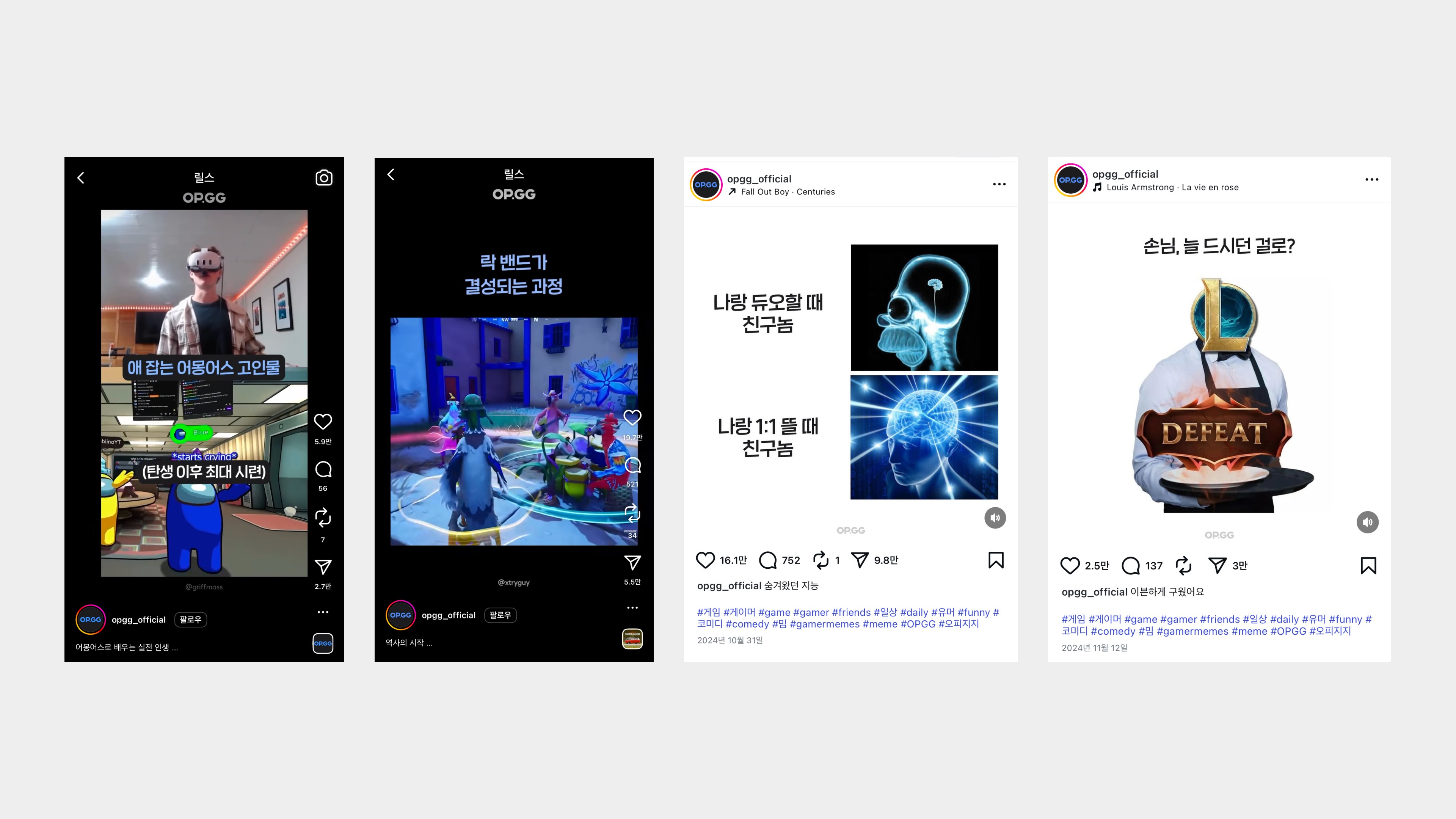
From the outside, it looked like a successful branding experiment, and in many ways it was. More importantly, it gave us a channel where the brand could show wit without sounding like an ad, and where our tone, persona, and editorial point of view could be recognized naturally.
The Metrics Paradox: Followers Are Not Fans
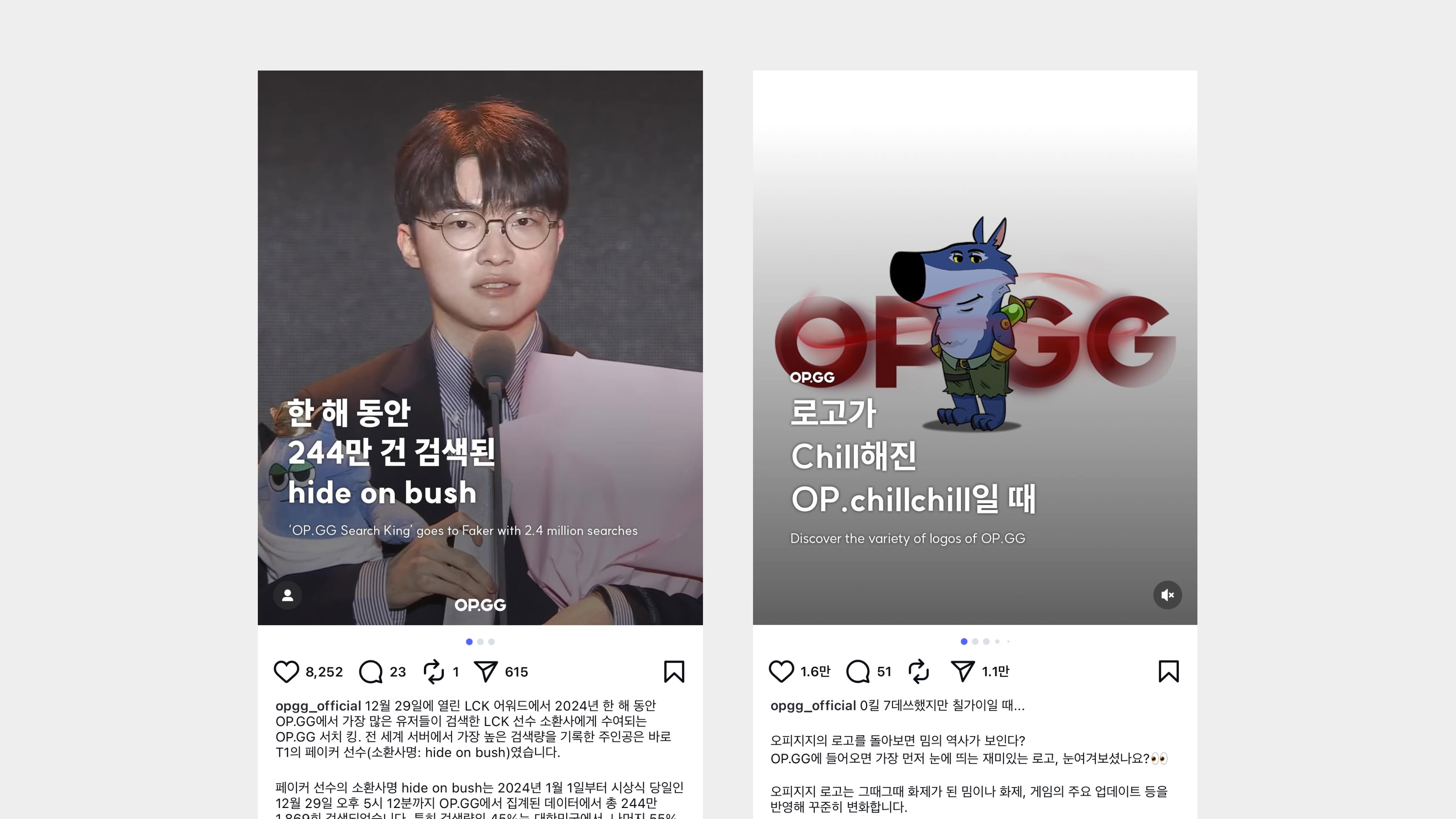
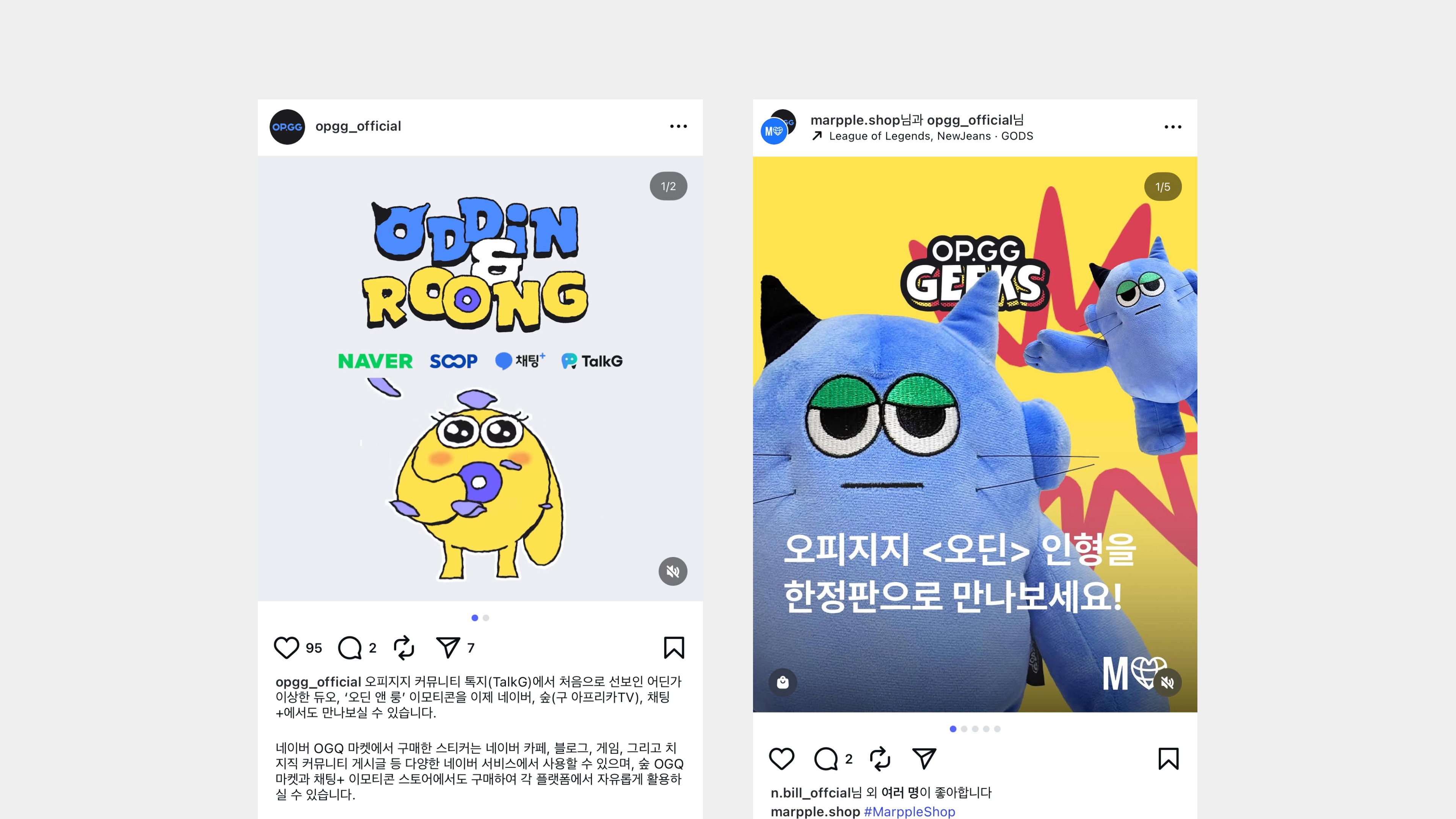
At the same time, the project taught me where metrics are useful and where they become misleading. Reach and follower growth clearly helped prove momentum, but they did not automatically convert into paying fans or stronger business results. People who enjoy sharing images and reacting to content are not always the same people who purchase products or subscribe. That distinction became especially clear when we promoted IP-based goods and emoticons to Instagram followers and found that audience scale did not translate directly into sales. It reminded me that metrics are powerful when they help explain progress, but dangerous when they begin to replace the purpose itself.
Branding is not complete just because the numbers rise. In the end, what remained most valuable was not the follower count but the system we built: the editorial principles, the operating rhythm, the collaboration model, and the proof that a designer can open a new lane, validate a direction, and leave a rail for the team to keep running on.
Closing Thoughts
Looking back, the reason I took hold of Instagram was simple. I wanted to create a place where a brand direction could be tested in public, not just discussed internally. I wanted to build small wins into a stronger logic and leave behind something the team could continue after me. Even now, that remains one of the most important things I try to do in brand work.
A brand is not proven in a single statement or campaign, but in the way it behaves repeatedly over time. In fast-growing startups, where revenue and metrics naturally dominate the conversation, persuading people to value that kind of consistency is not always easy. Still, I believe that is exactly why it matters to keep building channels, systems, and experiences that make a brand’s behavior visible. Numbers pass. What stays is the structure that allows the next move to happen with more clarity.